 Back to Blog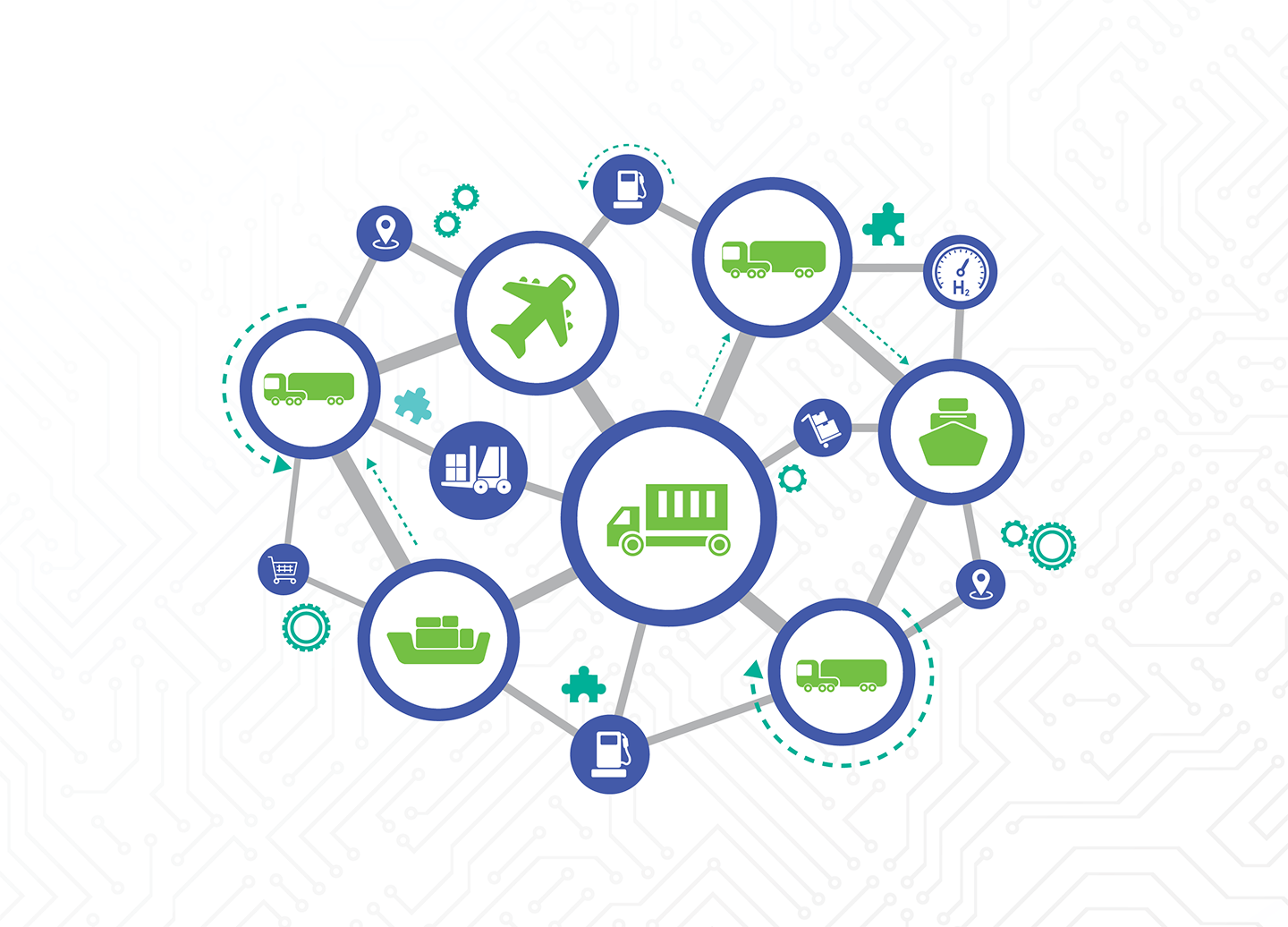
Discover how shipping rules engines automate carrier selection and routing decisions across complex enterprise shipping operations
A shipping rules engine is the decision layer that sits between an organization’s business systems, including enterprise resource planning (ERP), warehouse management systems (WMS), and order management systems (OMS), and the carriers that ultimately move a shipment. It evaluates shipment data, such as weight, destination, customer type, and service commitments, against a defined set of business rules to determine the best-fit routing option, carrier, and service level for each shipment. A rules engine typically evaluates routing logic before or alongside shipment rating, which determines transportation cost.
For years, many enterprise shippers relied on static routing logic, hard-coded ERP or WMS customizations, or manual decision-making processes to decide how shipments moved through their network. That approach may have worked just fine when carrier networks were simpler and shipping volumes were lower. However, as distribution operations continue to grow and carrier networks evolve, these approaches can quickly break down and become difficult to maintain.
Today, a single shipment may qualify for multiple carriers, service levels, delivery commitments, customer-specific routing needs, and compliance rules, significantly increasing the level of sophistication needed to make these determinations. Modern rules engines can simultaneously evaluate a wide range of shipment attributes, allowing organizations to automate complex routing choices while ensuring business requirements are consistently applied across the operation.
In this article, we’ll break down how shipping rules engines work, how they evaluate shipment data and execute routing decisions, and why they have become a key component of enterprise shipping architecture.
Signs Your Organization Needs a Shipping Rules Engine
Many organizations don’t realize they need a shipping rules engine until they’ve encountered operational challenges that expose the limitations of manual decision-making, static routing logic, or hard-coded configurations. These challenges can grow into a source of inefficiency, inconsistency, and unnecessary cost.
Common indicators that a shipping rules engine may be needed include:
- Routing logic is spread across multiple systems, workflows, or custom applications.
- Carrier selection decisions become increasingly difficult to maintain as carrier networks and service offerings expand.
- Routing decisions are embedded in ERP or WMS customizations.
- Shipping rules changes require IT involvement or code updates.
- Different distribution centers apply routing rules differently.
While any one of these might be manageable on its own, together, they reveal a system with inefficient routing decision processes that can eventually turn into a collection of complex exceptions.
Modern enterprise shipping environments generate more variables than an individual user or hard-coded workflow can consistently evaluate in real time. A rules engine addresses this roadblock by centralizing routing logic in a single place, where it can be updated, tested, and adjusted as needed without disrupting other systems.
Static Routing vs. Rules-Based Routing
With static routing, a shipment meeting a specific condition would be assigned a fixed carrier or service, regardless of any changes like transportation costs, carrier performance, or business requirements. These shipments would follow the same exact path until the static routing was manually adjusted. It’s typically applied as a rule inside the ERP or WMS and common examples include:
- All ground shipments move through Carrier A.
- All packages over 50 pounds are assigned to Carrier B.
- All orders from a specific customer are permanently tied to a single carrier or service.
Many shipping companies still run static rules because they are fairly straightforward to set up. However, this approach assumes business conditions stay the same, which is exactly where issues start to surface. Any changes in carrier contracts, service offerings, surcharges, customer expectations, and exceptions can require another custom rule, system modification, or manual workaround, making routing logic much more challenging to manage and maintain.
On the other hand, rules-based routing separates decision-making logic from the systems responsible for shipment execution. Rather than relying on fixed assignments, a rules engine evaluates each shipment against a set of configurable business rules at the time of shipment. This gives organizations the flexibility to adapt to evolving conditions, using current shipment data, operational priorities, and business goals to guide outcomes.
By centralizing routing logic, organizations can consistently apply decisions across multiple facilities, carrier contracts, and customer-specific requirements without relying on hard-coded workflows or manual intervention. The result is a more scalable and maintainable approach to shipping operations, allowing teams to update, test, and refine routing rules as business needs evolve while reducing the burden of ongoing system maintenance.
How Shipping Rules Engines Evaluate Shipment Data in Real Time
When an order is created in the ERP, WMS, or OMS, the relevant shipment data is released to the rules engine, typically through an API or direct system integration, for processing where it evaluates shipment attributes against the business’s configured rules. After it analyzes multiple data points simultaneously, it returns a routing decision, carrier, service level, and any required handling instructions before the shipment moves on to rating.
Common shipment attributes evaluated by a rules engine include:
- Physical attributes: weight, dimensions, packaging type
- Location data: origin facility, destination address, delivery zone
- Customer-level requirements: routing agreements, delivery windows, service commitments
- Order characteristics: order value, product classification, hazmat or regulatory flags
Because several of these attributes can vary from shipment to shipment, this process occurs at the moment an order is created, usually in milliseconds, rather than on a delayed basis or in batches. This results in a routing decision based on the complete shipment profile and enables teams to apply complex rules consistently across every shipment, no matter the shipping location or order volume.
Carrier Selection, Service Optimization, and Failover Routing
Carrier and service selection automation is where a rules engine actually executes the decision logic. An important distinction to make is the difference between this and rate shopping, as the two are often confused. Rate shopping compares cost across carriers for a given shipment. Rules-based carrier selection considers cost as one of many factors when making a decision. Many organizations focus primarily on transportation costs, but enterprise routing determinations can be influenced by a much broader rule set.
Carrier Selection Automation
Instead of assigning shipments to a predetermined carrier, the rules engine can analyze available options and automatically select the carrier that aligns best with the organization’s business goals and requirements. These decisions can be based on factors such as carrier eligibility, negotiated contracts, transit performance, customer preferences, or transportation cost.
Service-Level Selection
Rules engines also automate service-level decisions once a carrier is selected. By assessing delivery commitments and transportation costs, the engine chooses between Ground, 2-Day, or Next-Day services based on the lowest-cost available option that still meets the required delivery date. This helps shippers keep transportation costs under control while maintaining customer service expectations and delivery promises.
Exception Handling and Failover Routing
Carrier systems can become unavailable, disruptions can occur, capacity constraints can emerge, and rating requests can fail. The rules engine can be configured with exception handling logic that automatically adjusts in situations like these where the first-choice option might not be available. By setting a failover path, shipping teams can maintain operational continuity and prevent any backup in shipping workflows when unexpected issues arise. Without this, a single carrier disruption can stall shipments until someone manually reroutes them.
Rules Governance: Testing, Version Control, and Change Management
A rules engine will only produce consistent results if the rules themselves are managed with the same importance and discipline as the software they replace. A rule change affects every shipment that falls within the corresponding conditions which means any untested change can misroute a significant number of shipments before anyone catches it.
Without the proper oversight, even small adjustments can create unintended downstream consequences that are difficult to anticipate. A lack of documented ownership, testing procedures, and version control can leave organizations struggling to understand why routing decisions have changed, who made the change, or how to find a quick resolution for unexpected outcomes. That’s why successful shipping operations treat routing logic as a controlled business process rather than simple configuration settings.
Common governance practices include:
- Clearly defining ownership and approval processes for routing rules
- Maintaining documentation that indicates the purpose of each rule
- Tracking modifications through version control and audit trails
- Testing rule changes before they are implemented
- Establishing change management procedures for critical updates
Testing and version control are especially important as rule sets grow in complexity. By validating adjustments before deployment and maintaining visibility over how rules evolve, shipping teams can ensure routing logic remains accurate, reliable, and aligned with business goals as logistics operations continue to scale.
Reducing ERP and WMS Customizations with a Dedicated Rules Engine
For many organizations, it is common to initially implement routing logic directly within their ERP, WMS, or OMS because those systems already hold the data needed to make shipping decisions. This can work for simple environments, but when routing requirements progress faster than the systems, businesses can find themselves continually adding customizations, exceptions, and hard-coded logic to keep pace with changing transportation needs.
Each of these additions can create recurring problems specific to the ERP or WMS customization approach:
- Upgrade risk: Every ERP or WMS version upgrade has to account for custom shipping logic which can add cost and risk to upgrades that would otherwise be routine.
- Vendor and technical dependency: Changes to routing logic often require development resources and IT involvement which can slow the organization’s ability to adapt to evolving priorities.
- Scalability challenges: Routing logic built around a single system can be challenging to standardize, maintain, and deploy consistently as a business adds facilities, each with its own carrier contracts and regional requirements.
A dedicated rules engine separates transportation decision-making from the systems responsible for managing orders, inventory, and warehouse operations. That separation is also what helps make multi-facility expansion manageable. Instead of applying the same logic across each location, a centralized rules engine can pull from a shared base rule set for conditions that should hold across the enterprise’s network, such as hazmat restrictions or customer-specific routing agreements. At the same time, it allows facility-level conditions to apply where things like carrier availability or delivery commitments may differ.
A dedicated rules engine unifies shipping decisions in an independent layer that can be updated, tested, and scaled without the risks associated with ERP or WMS customizations. This flexible architecture enables teams to focus on crucial execution tasks while the rules engine takes care of routing decisions.
Everything described above, real-time evaluation, multi-condition logic, failover routing, governed change management, and multi-facility scaling, is what a rules engine needs to do. ProShip’s rules engine is designed to meet those needs, specifically for high-volume, multi-carrier enterprise shipping.
How ProShip Uses Rules Engines to Automate Enterprise Shipping Decisions
As a leading provider of enterprise-grade multi-carrier shipping software (MCSS), ProShip’s rules engine functions as the core decision layer between business systems and carrier networks. It’s built to handle the volume and complexity of high-volume parcel operations, evaluating shipment characteristics in real time and applying configured business rules before a shipment is rated to determine the optimal carrier, service, route, and compliance requirements for each individual shipment.
Carrier and Service Selection
At the execution layer, ProShip evaluates carriers, services, transit times, and business requirements in real time to automate carrier and service-level selection. Integrating with over 250 domestic and international carriers, ProShip is a carrier-agnostic platform, so no carrier is favored over another in the selection logic. Its capabilities move beyond simple rate shopping, comparing multiple carrier options, applying pre-defined business rules, and identifying the lowest-cost service to meet required delivery commitments. The platform supports Basic Rate Shopping, Time-in-Transit Rate Shopping, and Advanced Date Shopping, enabling organizations to balance transportation cost, promised delivery dates, and customer expectations within a single decision framework.
Complex Routing Logic Execution
Carrier rating, business rule application, and shipment documentation all run within a single, unified platform, so multi-condition logic doesn’t require passing shipment data between separate systems. Teams can build and manage Best Way groups that define which carrier services should be compared against each other for a given shipment profile, then layer on conditions like carrier volume balancing or weather-based service adjustments. These rules are evaluated in milliseconds, ensuring that every shipment is routed according to the organization’s specific business objectives while maintaining carrier compliance.
Governance, Configuration, and Change Management
ProShip runs on a versionless, Continuous Improvement/Continuous Deployment (CI/CD) architecture, so updates are made continuously without any forced upgrades or downtime. This reduces the upgrade and technical dependency risk associated with ERP or WMS customizations since shipping rules don’t need to be rebuilt every time the core business systems change. Combined with centralized configuration across facilities, enterprise shippers can maintain consistent decision-making across their network while accommodating location-specific operational requirements through governed business rules rather than disconnected processes.
Together, these capabilities let enterprise shippers move past static routing and hard-coded logic, standardizing carrier and service decisions across a distribution network from a single platform.
Ready to Modernize Your Shipping Decision Logic?
If your enterprise shipping operations still rely on tribal knowledge, custom code, or outdated rule sets for carrier selection, a dedicated rules engine is likely worth considering. Schedule a no-pressure discovery call with a ProShip shipping expert to learn how a unified, real-time rules engine can automate carrier and service selection, reduce IT dependency, and scale routing decisions consistently across your entire distribution network.