 Back to Blog
This blog was contributed by Alex Kinkade, Sales & Marketing Director at StreamTech Engineering, a trusted ProShip partner
The Hidden Cost Behind Every Package
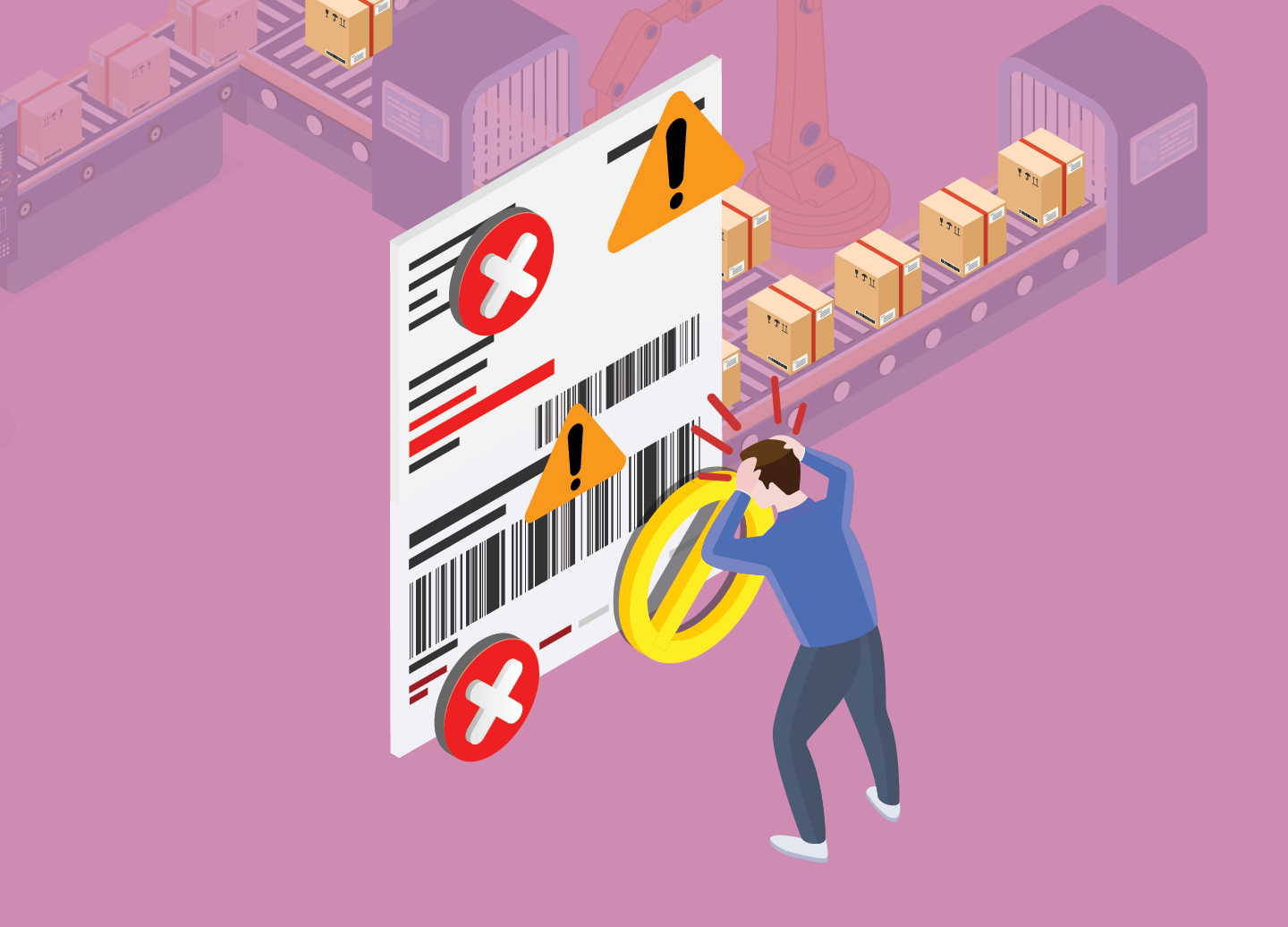
At first glance, a shipping label looks simple. It’s the final step before an order leaves the building. But in many operations, that label reflects a series of upstream decisions about weight, dimensions, carrier selection, and service levels. When those decisions are made manually or across disconnected systems, small inefficiencies compound quickly and quietly erode margin on every shipment.
For high-volume fulfillment environments, issues like manual rate selection, label reprints, and shipping errors add measurable cost per package. Over thousands of orders per day, those incremental losses can translate into significant monthly spend tied up in labor, carrier adjustments, and rework.
Common sources of hidden costs include:
- Manual rate shopping:
Even brief delays per order can accumulate into substantial labor overhead across a full operation.
- Label reprints and corrections:
Occasional misprints or data errors require relabeling, re-scanning, and additional handling that pulls labor away from value-added work.
- Mis-shipments and service-level errors:
Incorrect carrier selection or inaccurate data can result in carrier fees, chargebacks, and increased customer service involvement.
- Inefficient workflows:
Stop-and-start labeling, manual sortation, or system handoffs can significantly limit throughput and create downstream congestion.
These costs rarely appear as a single line item. Instead, they are absorbed into day-to-day operations, making them harder to quantify and easier to overlook.
Automating SLAM: Hardware in Motion, Software in Sync
The SLAM process (Scan, Label, Apply, Manifest) is the critical sequence of shipping automation in large fulfillment centers. It works by scanning parcels to capture data such as weight and dimension, manifesting them with the preferred carrier, and printing and applying the accurate shipping label. For high-volume operations, this process must occur with speed and precision to keep fulfillment moving.
Automating the SLAM process addresses many of these friction points by aligning physical equipment with intelligent decision-making. StreamTech’s Warehouse Control System (WCS) coordinates hardware on the line — scanners, dimensioners, labelers, conveyors — while ProShip’s advanced multi-carrier shipping software (MCSS) applies real-time business rules to select compliant carrier services and generate labels automatically.
Critical package data such as weight, dimensions, and identification is captured upstream using scanners and vision systems before a label is printed. That ensures downstream processes are driven by accurate, verified data rather than estimates or manual entry. ProShip’s business rules then apply pre-defined carrier logic in real time, executing decisions that previously required human intervention.
The result is a tightly integrated flow where hardware stays in motion and software keeps pace. Instead of operators bridging gaps between systems, automation handles decisions at conveyor speed, improving consistency, accuracy, and repeatability across every shift.
When Every Second (and Label) Matters
In high-throughput fulfillment environments, small time savings can have an outsized impact. In some operations, integrating automated SLAM with intelligent shipping logic has enabled meaningful increases in packages processed per person per hour, translating into faster order flow and reduced labor pressure.
Even modest efficiency gains per package can add up quickly across an entire operation. Teams are able to move more volume with the same headcount, while error reduction minimizes rework, relabeling, and exception handling. Over time, labor can be reallocated from repetitive tasks to higher-value activities that support growth and service quality.
ProShip’s shipping platform doesn’t just print the labels but also scales with your operation. Built for high-volume environments, it handles complex carrier requirements without slowing down, even during peak demand. By automating decision-making and eliminating manual intervention, ProShip helps fulfillment teams keep momentum, reduce exceptions, and ensure packages continue moving at full speed while optimizing cost and compliance.
Real-time data flowing between StreamTech’s automation systems and ProShip’s MCSS also improves visibility and control across the shipping process. By eliminating disconnects between physical handling and carrier logic, operations reduce the likelihood of mislabels, incorrect service selection, and downstream carrier corrections.
Importantly, full-scale automation is not always the starting point. Many facilities begin with targeted SLAM integration in the pack-and-ship zone, using a modular approach that scales as volume, complexity, or service demands increase.
Partners Building Fulfillment Systems That Pay for Themselves
For nearly two decades, StreamTech and ProShip have helped fulfillment operations align automation and shipping intelligence into cohesive systems. StreamTech focuses on keeping material moving efficiently inside the warehouse, while ProShip ensures shipments leaving the building are optimized, compliant, and cost-effective.
Together, they enable a fulfillment model where labeling is no longer a bottleneck, but a measurable indicator of performance. When hardware and software operate as one, the true cost of a label becomes visible, and so does the opportunity to turn it into a driver of ROI.
Ready to uncover the hidden costs in your fulfillment process? Discover how automation and intelligent shipping systems can transform your operations from a cost center into a profit driver. Contact the StreamTech team today to explore scalable solutions that deliver measurable ROI and learn more about the ProShip x StreamTech partnership that makes it possible.
About the Author:
Alex Kinkade is the Sales & Marketing Director at StreamTech Engineering. With over 18 years of B2B marketing experience, at StreamTech Alex has become a student of the Material Handling industry. Alex enjoys collaborating closely with the Engineering team, asking questions and exploring how advanced systems, controls programming, and software integration work together to drive efficiency in warehouse fulfillment. This deep technical understanding enables StreamTech to translate complex systems into clear, practical messaging that resonates with customers.
For Alex, the most rewarding part of his role is working with customers—seeing projects flow from concept to completion through the company, witnessing the customer’s vision become reality, and sitting down with them to celebrate the measurable success of their automation solutions. The best part is that in many cases, a successful automation project is an opportunity to watch a customer’s career blossom and share in a small part of their success story.